In this section
Introduction
Earlier when calculating where we needed to start looking for loops, given that exhaustive searches had eliminated most numbers up to 1015 we decided to look for systems where the maximum ratio of a seed value to K was greater than this value. Unfortunately loops with large values also contain small values, and all the values must be greater than our cut-off value. So what we need to do is find, for a particular combination of m and n, what the largest loop seed (the smallest loop member) is. For small n and m values we can just search through the loop members; the results are summarised in the following tables (LS is the largest loop seed).
|
|
||||||||||||||||||||||||||||||||||||||||||||||||||||||||||||||||||||||||||||||||
|
|
||||||||||||||||||||||||||||||||||||||||||||||||||||||||||||||||||||||||||||||||
|
|
Observations
There are a few interesting observations in the above table.
- When m=2*n the largest value is always equal to K, which generates the [1,4,2,1] cycle.
- The largest seed for m=2n+1 is the same as for m = 2n.
- The value for m=3*n is always K/5.
- The value for m=3n+1 is the same as for m=3n.
- The LS values grow more slowly than the K values with increasing n.
The values LS/K=1 when m=2n is obtained by setting all the 'a' values to 2. The 1/5 is when all the 'a' values are 3. The sequence continues [1, 1/5, 1/13, 1/29, 1/61, 1/125.0, 1/253, 1/509, ...], the rule being double it and add 3.
Here we have proved that there are no cycles (other than [1,4,2,1]) in 3x+1 that contain twice as many or more even numbers as odd numbers, so there is no point looking at systems where m>=2n. When a list consists of a repeated sequence it can be factorised, so [2,2,2] is [2]^3, which generates three repeats of the basic cycle [1,4,2,1]. This is the cycle with the largest possible ratio m/n.
Which 'a' Values?
For a given n value the loop values are determined by the equation.
s = (3n-1 + 3n-2*2a1 + 3n-3*2a1+a2 + ...)
What combinations of 'a' values lead to the loop seeds encountered above? Here are a few lists found by searching through the sets of all a values that meet the constraint sum(a)=m. The set of lists gets very large so I've stopped at m = 10.
| n | m | LS | loop |
| 3 | 5 | 23 | [1, 2, 2] |
| 3 | 6 | 37 | [2, 2, 2] |
| 4 | 7 | 101 | [1, 2, 2, 2] |
| 4 | 8 | 175 | [2, 2, 2, 2] |
| 5 | 8 | 319 | [1, 2, 1, 2, 2] |
| 6 | 10 | 1357 | [1, 2, 2, 1, 2, 2] |
It appears likely that for a given n and m the highest loop seed will be found by mixing the '1' and '2' values as uniformly as possible across the list. This can be achieved by using Bresenham's line algorith to connect the points (0,0) to (m,n). Applying this algorithm is a lot quicker than searching all the possible lists so we can easily try it for larger numbers. Here are some results (LS¬[obs] is the value obtained by testing all the loops, LS¬[post] is calculated from the postulated minimal loop)
| n | m | Minimal loop | LSobs | LSpost |
| 3 | 5 | [1, 2, 2] | 23 | 23 |
| 4 | 7 | [1, 2, 2, 2] | 101 | 101 |
| 5 | 8 | [1, 2, 1, 2, 2] | 319 | 319 |
| 6 | 10 | [1, 2, 2, 1, 2, 2] | 1357 | 1357 |
| 7 | 12 | [1, 2, 2, 1, 2, 2, 2] | 5095 | 5095 |
| 8 | 13 | [1, 2, 1, 2, 2, 1, 2, 2] | 14501 | 14501 |
So this method correctly predicts the largest loop seed for n values up to 8. Let's see what it predicts for some larger numbers.
| n | m | Minimal loop | LSpost |
| 9 | 15 | [1, 2, 2, 1, 2, 2, 1, 2, 2] | 60,191 |
| 10 | 16 | [1, 2, 1, 2, 2, 1, 2, 1, 2, 2] | 159,181 |
| 11 | 18 | [1, 2, 1, 2, 2, 1, 2, 2, 1, 2, 2] | 579,943 |
| 12 | 20 | [1, 2, 2, 1, 2, 2, 1, 2, 2, 1, 2, 2] | 2,378,821 |
| 13 | 21 | [1, 2, 1, 2, 2, 1, 2, 1, 2, 2, 1, 2, 2] | 5,805,215 |
| 14 | 23 | [1, 2, 1, 2, 2, 1, 2, 2, 1, 2, 2, 1, 2, 2] | 21,687,773 |
| 15 | 24 | [1, 2, 1, 2, 2, 1, 2, 1, 2, 2, 1, 2, 1, 2, 2] | 59,586,967 |
| 16 | 26 | [1, 2, 1, 2, 2, 1, 2, 2, 1, 2, 1, 2, 2, 1, 2, 2] | 213,933,253 |
| 17 | 27 | [1, 2, 1, 2, 1, 2, 2, 1, 2, 1, 2, 2, 1, 2, 1, 2, 2] | 548,440,271 |
| 18 | 29 | [1, 2, 1, 2, 2, 1, 2, 1, 2, 2, 1, 2, 1, 2, 2, 1, 2, 2] | 1,994,724,077 |
| 19 | 31 | [1, 2, 1, 2, 2, 1, 2, 2, 1, 2, 1, 2, 2, 1, 2, 2, 1, 2, 2] | 7,319,701,703 |
| 20 | 32 | [1, 2, 1, 2, 2, 1, 2, 1, 2, 2, 1, 2, 1, 2, 2, 1, 2, 1, 2, 2] | 19,831,564,885 |
| 21 | 34 | [1, 2, 1, 2, 2, 1, 2, 1, 2, 2, 1, 2, 2, 1, 2, 1, 2, 2, 1, 2, 2] | 68,498,816,767 |
| 22 | 35 | [1, 2, 1, 2, 1, 2, 2, 1, 2, 1, 2, 2, 1, 2, 1, 2, 2, 1, 2, 1, 2, 2] | 176,086,441,085 |
| 23 | 37 | [1, 2, 1, 2, 2, 1, 2, 1, 2, 2, 1, 2, 1, 2, 2, 1, 2, 1, 2, 2, 1, 2, 2] | 634,236,499,703 |
| 24 | 39 | [1, 2, 1, 2, 2, 1, 2, 2, 1, 2, 1, 2, 2, 1, 2, 2, 1, 2, 1, 2, 2, 1, 2, 2] | 2,376,761,709,797 |
| 25 | 40 | [1, 2, 1, 2, 2, 1, 2, 1, 2, 2, 1, 2, 1, 2, 2, 1, 2, 1, 2, 2, 1, 2, 1, 2, 2] | 6,189,164,834,479 |
| 26 | 42 | [1, 2, 1, 2, 2, 1, 2, 1, 2, 2, 1, 2, 2, 1, 2, 1, 2, 2, 1, 2, 1, 2, 2, 1, 2, 2] | 21,429,806,042,125 |
| 27 | 43 | [1, 2, 1, 2, 1, 2, 2, 1, 2, 1, 2, 2, 1, 2, 1, 2, 2, 1, 2, 1, 2, 2, 1, 2, 1, 2, 2] | 53,749,761,723,047 |
| 28 | 45 | [1, 2, 1, 2, 2, 1, 2, 1, 2, 2, 1, 2, 1, 2, 2, 1, 2, 1, 2, 2, 1, 2, 1, 2, 2, 1, 2, 2] | 192,396,217,969,781 |
| 29 | 46 | [1, 2, 1, 2, 1, 2, 2, 1, 2, 1, 2, 2, 1, 2, 1, 2, 1, 2, 2, 1, 2, 1, 2, 2, 1, 2, 1, 2, 2] | 490,121,922,519,007 |
| 30 | 48 | [1, 2, 1, 2, 2, 1, 2, 1, 2, 2, 1, 2, 1, 2, 2, 1, 2, 1, 2, 2, 1, 2, 1, 2, 2, 1, 2, 1, 2, 2] | 1,854,711,264,038,941 |
These values haven't been verified using exhaustive searches.
Where to look for loops
Looking at the loop seeds (the smallest number in a loop) gives us a much tighter constraint. If we take the set of loop seeds for a particular 'n' and find the largest, we can see that these are much smaller than the largest loop members. The following table shows how the two sets of numbers compare (the ratios have been truncated to whole numbers).
| n | m | Largest seed | Max loop member | Ratio |
| 1 | 2 | 1 | 1 | 1 |
| 2 | 4 | 7 | 11 | 1 |
| 3 | 5 | 23 | 49 | 2 |
| 4 | 7 | 101 | 331 | 3 |
| 5 | 8 | 319 | 1,121 | 3 |
| 6 | 10 | 1,357 | 6,995 | 5 |
| 7 | 12 | 5,095 | 43,289 | 8 |
| 8 | 13 | 14,501 | 133,963 | 9 |
| 9 | 15 | 60,191 | 813,601 | 13 |
| 10 | 16 | 159,181 | 2,473,571 | 15 |
| 11 | 18 | 579,943 | 14,913,449 | 25 |
| 12 | 20 | 2,378,821 | 89,827,835 | 37 |
| 13 | 21 | 5,805,215 | 270,532,081 | 46 |
| 14 | 23 | 21,687,773 | 1,625,792,467 | 74 |
| 15 | 24 | 59,586,967 | 4,885,766,009 | 81 |
| 16 | 26 | 213,933,253 | 29,333,801,579 | 137 |
| 17 | 27 | 548,440,271 | 88,068,513,601 | 160 |
| 18 | 29 | 1,994,724,077 | 528,550,376,899 | 265 |
| 19 | 31 | 7,319,701,703 | 3,171,988,582,729 | 433 |
| 20 | 32 | 19,831,564,885 | 9,518,113,231,835 | 479 |
| 21 | 34 | 68,498,816,767 | 57,113,782,541,201 | 833 |
| 22 | 35 | 176,086,441,085 | 171,358,527,492,787 | 973 |
| 23 | 37 | 634,236,499,703 | 1,028,188,503,373,849 | 1,621 |
| 24 | 39 | 2,376,761,709,797 | 6,169,311,754,971,211 | 2,596 |
| 25 | 40 | 6,189,164,834,479 | 18,508,485,020,727,521 | 2,990 |
| 26 | 42 | 21,429,806,042,125 | 111,052,261,859,011,235 | 5,182 |
| 27 | 43 | 53,749,761,723,047 | 333,161,183,623,544,809 | 6,198 |
| 28 | 45 | 192,396,217,969,781 | 1,998,977,068,329,828,283 | 10,390 |
| 29 | 46 | 490,121,922,519,007 | 5,996,966,389,361,573,681 | 12,236 |
| 30 | 48 | 1,854,711,264,038,941 | 35,981,870,443,280,432,531 | 19,400 |
So by the time we get to 30 we are already 4 orders of magnitude down on the limit calculated using the largest value. The chart shows that this ratio increases by about an order of magnitude for every seven n values.
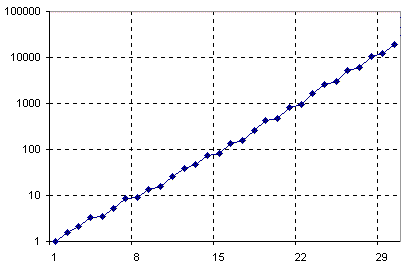
For n = 82 we'd expect the ratio to be about 1012, so the largest value we'd need to test searching for loops would be around 1000. The next table shows how the ratio LS/K varies with 'n' (using the predicted LS values).
| n | m | LS | K | LS/K |
| 1 | 2 | 1 | 1 | 1 |
| 2 | 4 | 7 | 7 | 1 |
| 3 | 5 | 23 | 5 | 4 |
| 4 | 7 | 101 | 47 | 2 |
| 5 | 8 | 319 | 13 | 24 |
| 6 | 10 | 1,357 | 295 | 4 |
| 7 | 12 | 5,095 | 1,909 | 2 |
| 8 | 13 | 14,501 | 1,631 | 8 |
| 9 | 15 | 60,191 | 13,085 | 4 |
| 10 | 16 | 159,181 | 6,487 | 24 |
| 11 | 18 | 579,943 | 84,997 | 6 |
| 12 | 20 | 2,378,821 | 517,135 | 4 |
| 13 | 21 | 5,805,215 | 502,829 | 11 |
| 14 | 23 | 21,687,773 | 3,605,639 | 6 |
| 15 | 24 | 59,586,967 | 2,428,309 | 24 |
| 16 | 26 | 213,933,253 | 24,062,143 | 8 |
| 17 | 27 | 548,440,271 | 5,077,565 | 108 |
| 18 | 29 | 1,994,724,077 | 149,450,423 | 13 |
| 19 | 31 | 7,319,701,703 | 985,222,181 | 7 |
| 20 | 32 | 19,831,564,885 | 808,182,895 | 24 |
| 21 | 34 | 68,498,816,767 | 6,719,515,981 | 10 |
| 22 | 35 | 176,086,441,085 | 2,978,678,759 | 59 |
| 23 | 37 | 634,236,499,703 | 43,295,774,645 | 14 |
| 24 | 39 | 2,376,761,709,797 | 267,326,277,407 | 8 |
| 25 | 40 | 6,189,164,834,479 | 252,223,018,333 | 24 |
| 26 | 42 | 21,429,806,042,125 | 1,856,180,682,775 | 11 |
| 27 | 43 | 53,749,761,723,047 | 1,170,495,537,221 | 45 |
| 28 | 45 | 192,396,217,969,781 | 12,307,579,633,871 | 15 |
| 29 | 46 | 490,121,922,519,007 | 1,738,366,812,781 | 281 |
| 30 | 48 | 1,854,711,264,038,941 | 75,583,844,616,007 | 24 |
Searching up to 281 will eliminate all possibility of loops with fewer than 79 members. The next table shows some values from the region 80-90 (I've missed out the actual LS and K values as they are rather large). Note the ratios are still pretty small, and that the largest value we'd have to test to eliminate loops with fewer than 234 members would be 867.
| n | m | LS/K | Predicted |
| 81 | 129 | 45 | 46 |
| 82 | 130 | 867 | 877 |
| 83 | 132 | 64 | 65 |
| 84 | 134 | 33 | 34 |
| 85 | 135 | 108 | 108 |
| 86 | 137 | 43 | 44 |
| 87 | 138 | 281 | 284 |
| 88 | 140 | 59 | 59 |
| 89 | 142 | 32 | 34 |
| 90 | 143 | 88 | 90 |
The "predicted" values are calculated using the equation
LS/K = n * √8 / (m - n * log(3)/log(2))
which is derived empirically from the next chart. The product of LS/K and (m−n * log(3)/log(2)) is nearly linear:
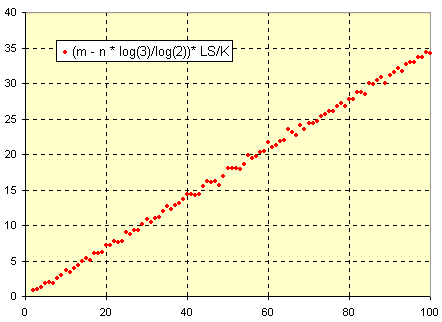
The gradient is about 0.35, which roughly 1/√8, the constant I used to predict the LS/K values in the earlier table.
(m - n * log(3)/log(2)) varies irregularly in the range 0 - 1. LS/K values will be at their largest when it is close to 0.
The next chart shows the values of LS/K (predicted) out to n=1500. Note the bulk of the values are close to the 0.35n line which forms the lower bound. However, some of the outriders are significantly higher, here by up to a factor of 1000.
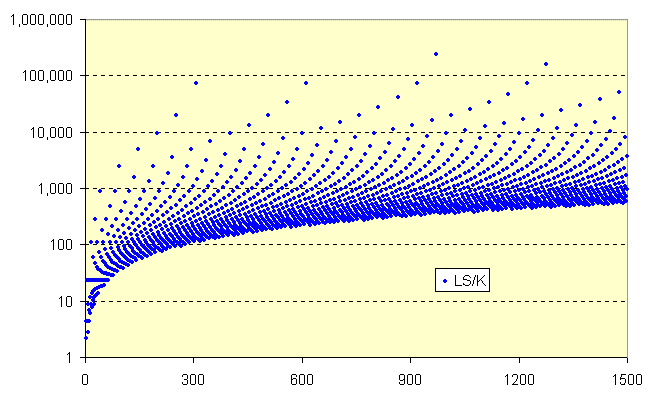
Notable values are summarised in the next table, which covers n up to 100,000,000.
| n | m | m-n*log(3)/log(2) | n/√8 | LS/K (pred) | LS/K (calc) |
| 3 | 5 | 0.245112 | 1.06 | 4 | 4 |
| 5 | 8 | 0.075187 | 1.77 | 23 | 24 |
| 17 | 27 | 0.055637 | 6.01 | 108 | 108 |
| 29 | 46 | 0.036087 | 10.25 | 284 | 281 |
| 41 | 65 | 0.016537 | 14.50 | 876 | 867 |
| 94 | 149 | 0.013525 | 33.23 | 2,457 | 2,419 |
| 147 | 233 | 0.010512 | 51.97 | 4,943 | 4,862 |
| 200 | 317 | 0.007500 | 70.71 | 9,428 | 9,266 |
| 253 | 401 | 0.004487 | 89.45 | 19,933 | 19,584 |
| 306 | 485 | 0.001475 | 108.19 | 73,358 | 72,058 |
| 971 | 1,539 | 0.001412 | 343.30 | 243,165 | 238,670 |
| 1,636 | 2,593 | 0.001349 | 578.41 | 428,829 | 420,841 |
| 2,301 | 3,647 | 0.001286 | 813.53 | 632,680 | 620,858 |
| 2,966 | 4,701 | 0.001223 | 1048.64 | 857,529 | 841,477 |
| 3,631 | 5,755 | 0.001160 | 1283.75 | 1,106,796 | 1,086,054 |
| 4,296 | 6,809 | 0.001097 | 1518.87 | 1,384,686 | |
| 4,961 | 7,863 | 0.001034 | 1753.98 | 1,696,431 | |
| 5,626 | 8,917 | 0.000971 | 1989.09 | 2,048,618 | |
| 6,291 | 9,971 | 0.000908 | 2224.20 | 2,449,663 | |
| 6,956 | 11,025 | 0.000845 | 2459.32 | 2,910,491 | |
| 7,621 | 12,079 | 0.000782 | 2694.43 | 3,445,545 | |
| 8,286 | 13,133 | 0.000719 | 2929.54 | 4,074,330 | |
| 8,951 | 14,187 | 0.000656 | 3164.66 | 4,823,840 | |
| 9,616 | 15,241 | 0.000593 | 3399.77 | 5,732,537 | |
| 10,281 | 16,295 | 0.000530 | 3634.88 | 6,857,158 | |
| 10,946 | 17,349 | 0.000467 | 3870.00 | 8,285,043 | |
| 11,611 | 18,403 | 0.000404 | 4105.11 | 10,157,974 | |
| 12,276 | 19,457 | 0.000341 | 4340.22 | 12,722,434 | |
| 12,941 | 20,511 | 0.000278 | 4575.33 | 16,448,126 | |
| 13,606 | 21,565 | 0.000215 | 4810.45 | 22,354,632 | |
| 14,271 | 22,619 | 0.000152 | 5045.56 | 33,149,032 | |
| 14,936 | 23,673 | 0.0000892 | 5280.67 | 59,181,261 | |
| 15,601 | 24,727 | 0.0000262 | 5515.79 | 210,131,286 | |
| 47,468 | 75,235 | 0.0000158 | 16782.47 | 1,064,327,305 | |
| 79,335 | 125,743 | 0.00000529 | 28049.16 | 5,305,246,769 | |
| 190,537 | 301,994 | 0.0000000930 | 67365.00 | 724,231,494,698 | |
| 10,781,274 | 17,087,915 | 0.0000000149 | 3811755.98 | 255,802,613,502,959 | |
| 75,278,381 | 119,313,411 | 0.0000000149 | 26614926.84 | 1,786,097,505,737,402 |
The linear relationship appears to hold for at least n values up to 3600, but using 1/√8 as the constant of proportionality appears to overestimate the values by about 2%. 0.36 would be closer. This doesn't really effect the result though. To find loops given that the smallest value must be greater than 1015 we need to search loops with at least 194 million members.
I stopped calculating LS/K at n = 3631 as the K value has 1730 digits.
Other pages
(c) John Whitehouse 2011 - 2023