Home page

|
Home page
|
Mandelbrot Colouring Algorithms |
IntroductionThis section describes the algorithms used to colour in the patterns. The colouring scheme is selected using the second character of the 't' command, for instance −tBS will use the stars colouring scheme on a pattern drawn in the B plane. There are six colouring algorithms (Standard, Stars, Bands, Real Bands, Imaginary Bands) and Quadrants. Standard is the default, the others are selected by appending one of the letters ('S', 'B', 'R', 'I' or 'Q') onto the −tM parameter. The Algorithms'Classic' AlgorithmThis colours the pattern by counting the number of iterations we have to perform before |Z| becomes greater then 2.
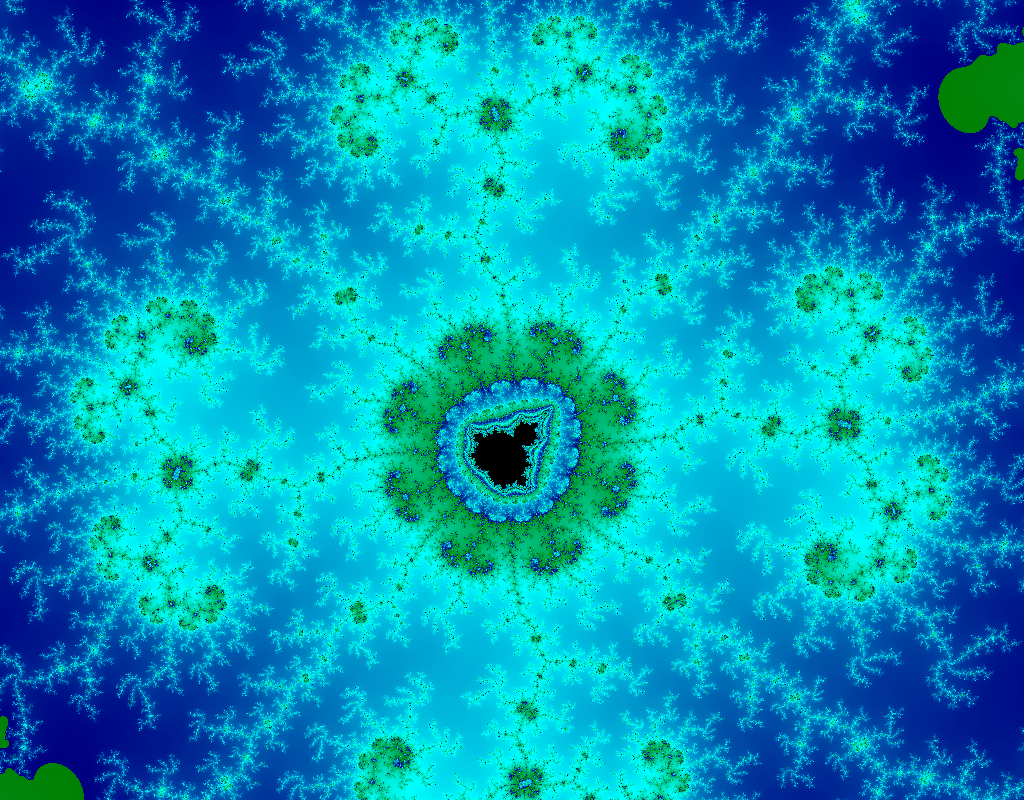
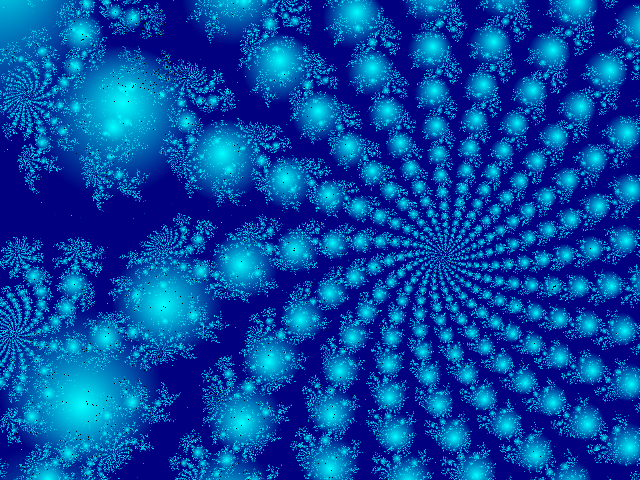
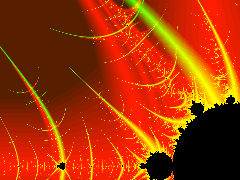
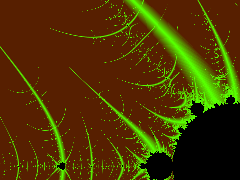
'Stars' Colouring AlgorithmThe stars colouring algorithm iterates the same equation as the standard scheme, but it also records the values of |Z| during the iteration. The smallest |Z| value encountered is used to decide the colour. This generates a pattern where the mini-mandelbrots that are found throughout the set appear to be surrounded by glowing halos as can be seen in the next image.
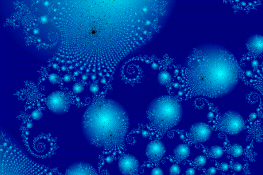
Here are a couple of frames taken from an animation. The are separated by a zoom factor of 26 (64) and have 'blob' factors of 0.001 and 0.0001.
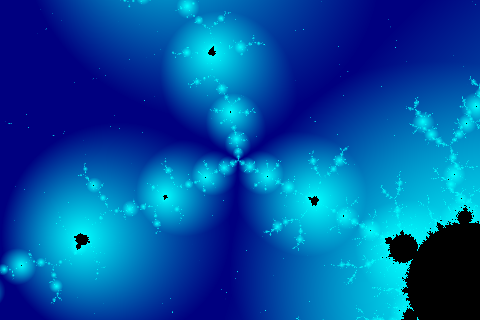
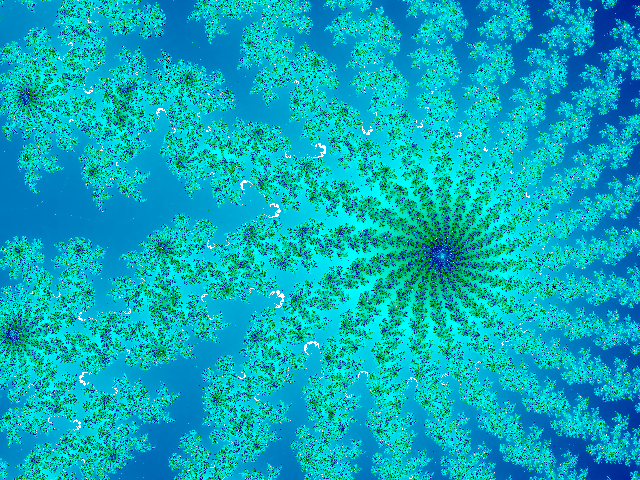
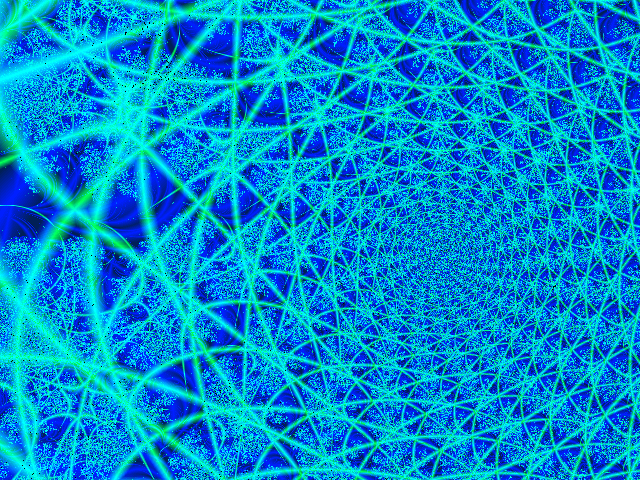
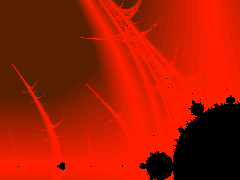
There is a stars animation on the animations page. In some circumstances the stars algorithm is much better at highlighting the structure as can be see in these next two images. (The commands to generate them are displayed alongside.)
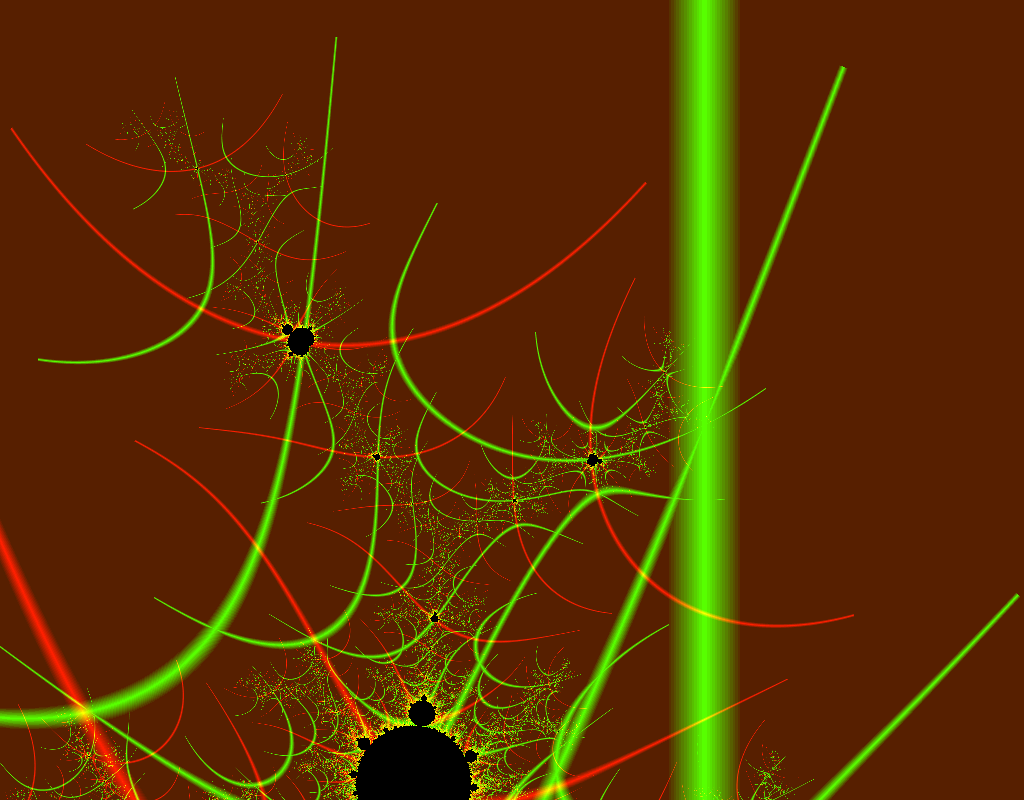
'Bands' Colouring AlgorithmIn the bands colouring algorithm, instead of calculating the smallest value of |Z| encountered during the iteration we monitor the real and imaginary parts independently, finding the smallest values of |r| and |i|. We then calculate a colour based on the combination of the two. Palettes 4 and 5 arrange the colours to emphasise the bands. The next image corresponds to the ones in the stars section, the remaining two further illustrate the bands algorithm.
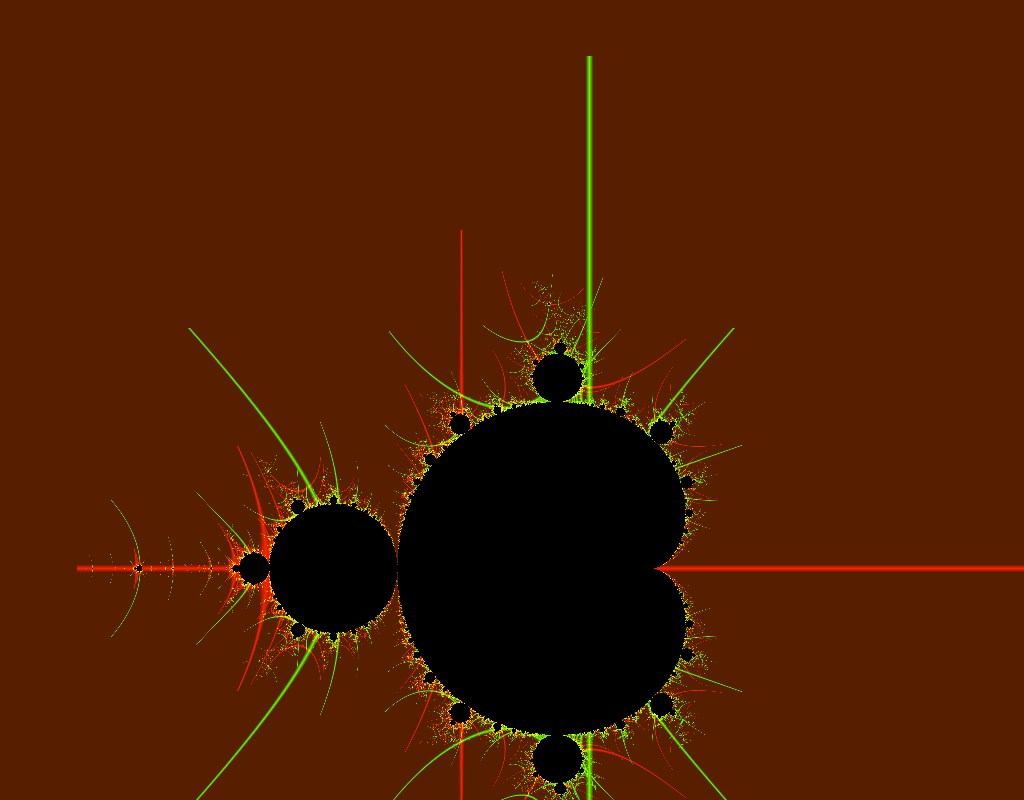
Imaginary and Real BandsThe colouring scheme used to generate the bands pattern can be split into two separate components, showing the contribution from the reall and the imaginary elements. "‑tMI" will draw the imaginary part and "‑tMR" the real part ("‑tJI" and "‑tJR" for the Julia sets). This separation can be seen in the following three images, reproduced from the colour schemes table above.
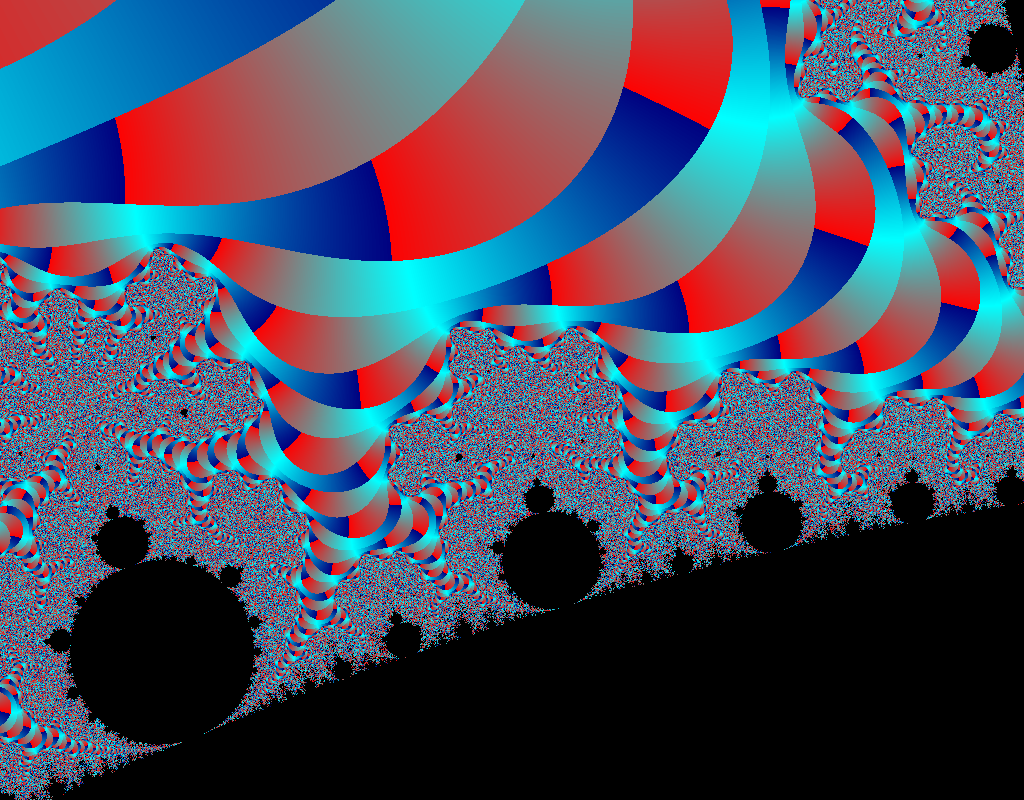
Quadrants Colouring Scheme Bands
|
|
||||||||||||||||||||
|
(c) John Whitehouse 2011
|
|||||||||||||||||||||