Home page

|
Home page
|
The effect of the Iterations Parameter |
|
Pixels in the images are coloured according to how many iterations, i, are required
before the magnitude of Z becomes greater than 2 (|Zi| > 2), or alternatively
Zx2 + Zy2 > 4.
If Z hasn't diverged
complex numbers, so we really mean |Z2400| < 2. If |Z| becomes
greater than 2, we count the number of iterations that have passed and use this
to choose a colour. If, after we've iterated more times than we care to, we
still haven't passed 2 we assume the point is inside the set and colour it
black. If you try generating your own patterns you will find that the further
you zoom in the larger iteration cut-off you will need to draw decent patterns.
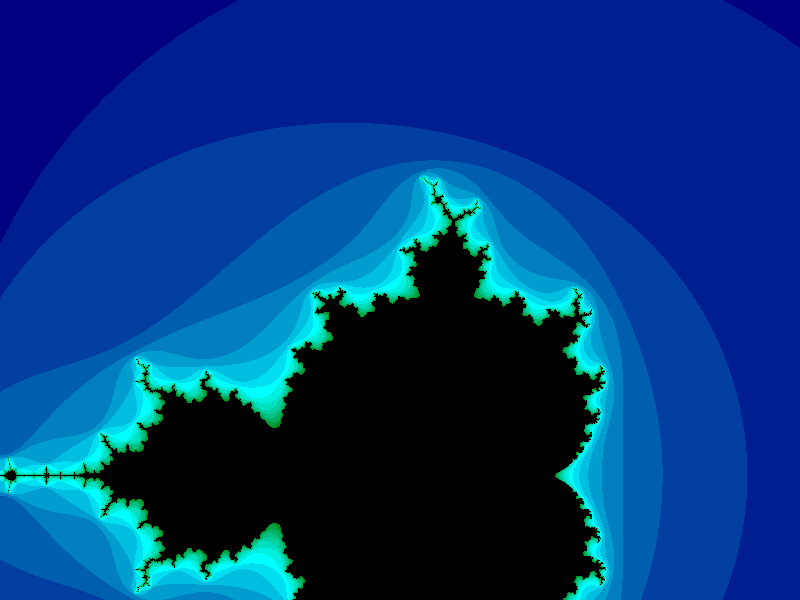
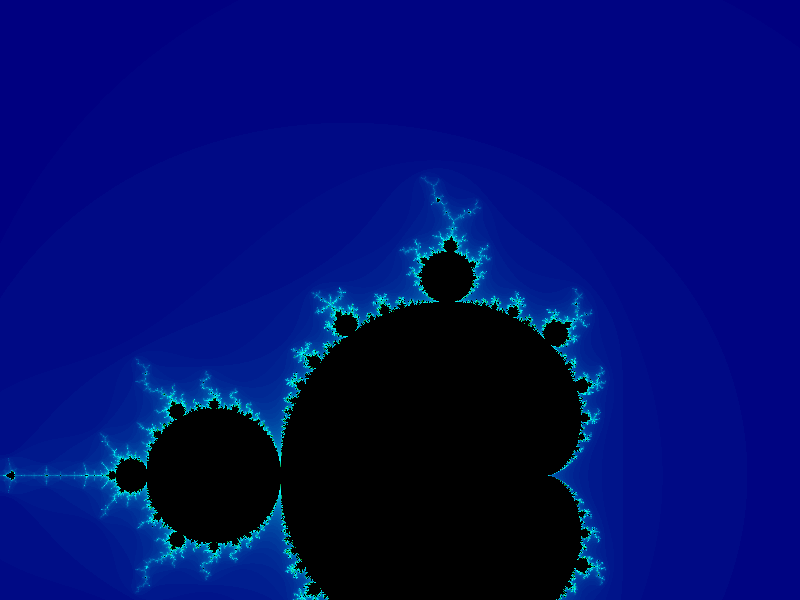
The following two images illustrate the effect of changing the maximum number of
iterations from 16 to 2400. In this case 2400 is probably too many, but 16
clearly isn't enough. If you choose too many the image will take ages to draw
but otherwise will be ok.
These pictures also illustrate the advantage of the new colouring algorithm. The locations of the colour bands no longer change depending on the number of iterations, so if you want to create a series of zoomed images you can increase the number of iterations as you go without loosing continuity. They were created with the new "-d8" colour scheme
|
|
|||||||
|
(c) John Whitehouse 2011
|
||||||||